
Multi-Axis Rotary Integrated Design
A hydrogen aircraft that cools itself through its skin.
MARID is a long-endurance fuel-cell UAV concept. Liquid hydrogen is conditioned on its way to the stack by the heat the aircraft already produces, and most of the waste heat leaves through leaf-vein networks under the wing, tail and fuselage skins, with no separate radiator. A studied variant dilutes the cathode exhaust to within 1.5 K of ambient.

The design
Birds, leaves and a cryogenic fuel
MARID is a quasi-fixed-wing aircraft of about 200 kg with two main wings and two V-tail surfaces that rotate independently, an aft thruster, and three vacuum-jacketed tanks of liquid hydrogen for a 48-hour mission. The wing structure is also the fuel plumbing: a hollow titanium spar at mid-chord carries hydrogen along the span, and chordwise branches under the skin spread it out like the veins of a leaf.
The idea comes from two places in nature. The swift, which stays aloft for months on a body that is all wing, and the leaf, which moves water and heat through a branching network that keeps working when a vein is cut.
Thermal architecture
One hydrogen circuit with a tap
The fuel leaves the tank at 20 K and takes heat where cold is useful: at the motor cold plate, where it reaches ambient temperature. It then joins a closed 50 bar hydrogen loop that collects the stack, motor and hotel loads and carries them to the skin. The fuel the stack consumes is tapped from the loop's warm side and brought to the anode temperature by a coolant jacket. At nominal loiter the fuel reaches the anode temperature without electric preheating. The baseline model, at 3,000 m by day:
Compact dilution variant. A one-metre ram-air duct brings the cathode exhaust to 1.5 K above ambient. Reconverged with the duct, the aircraft is 204.1 kg with a 10.5 K mean skin rise.
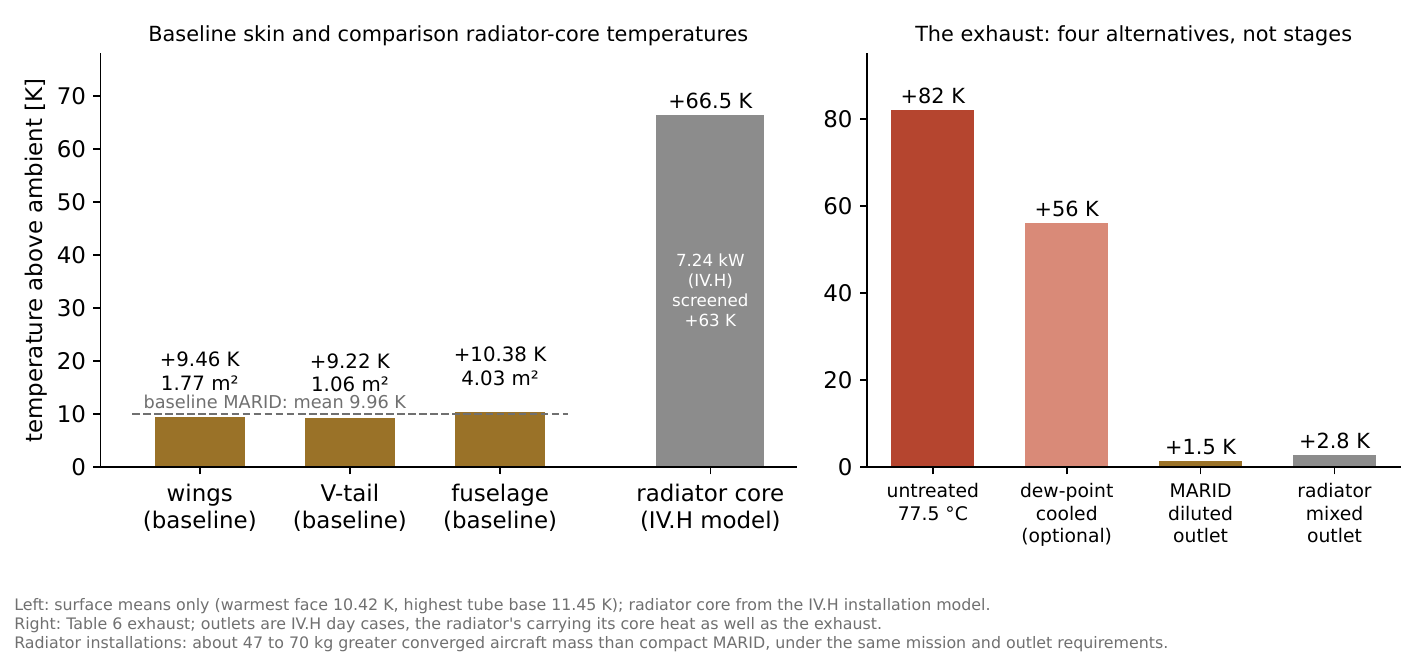
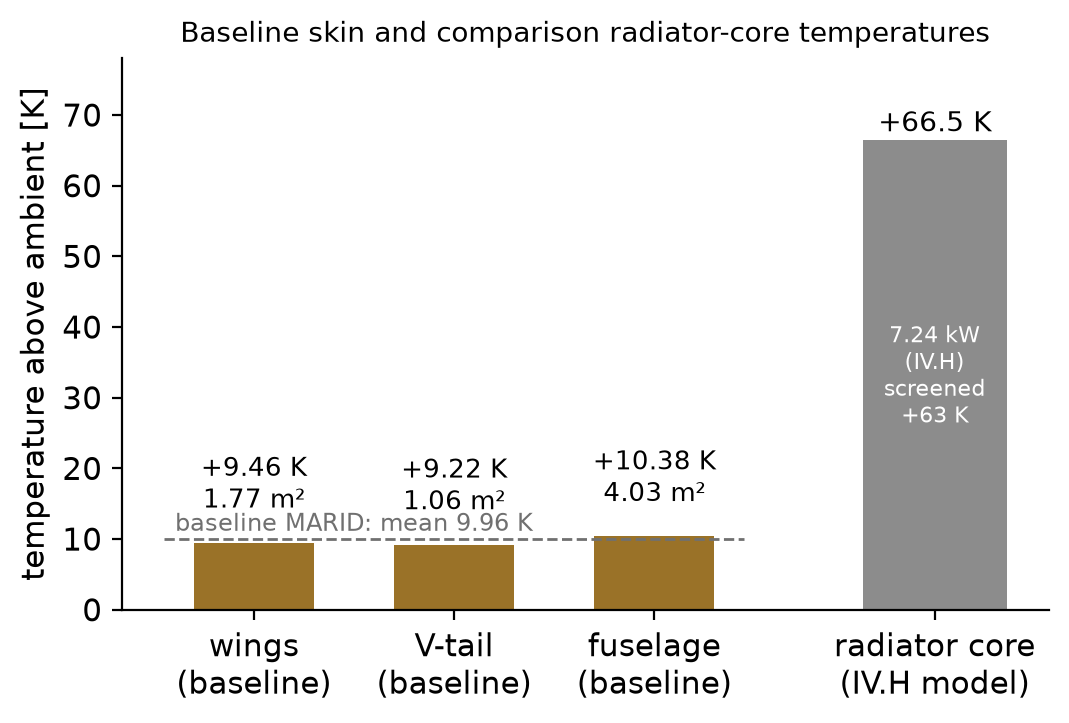
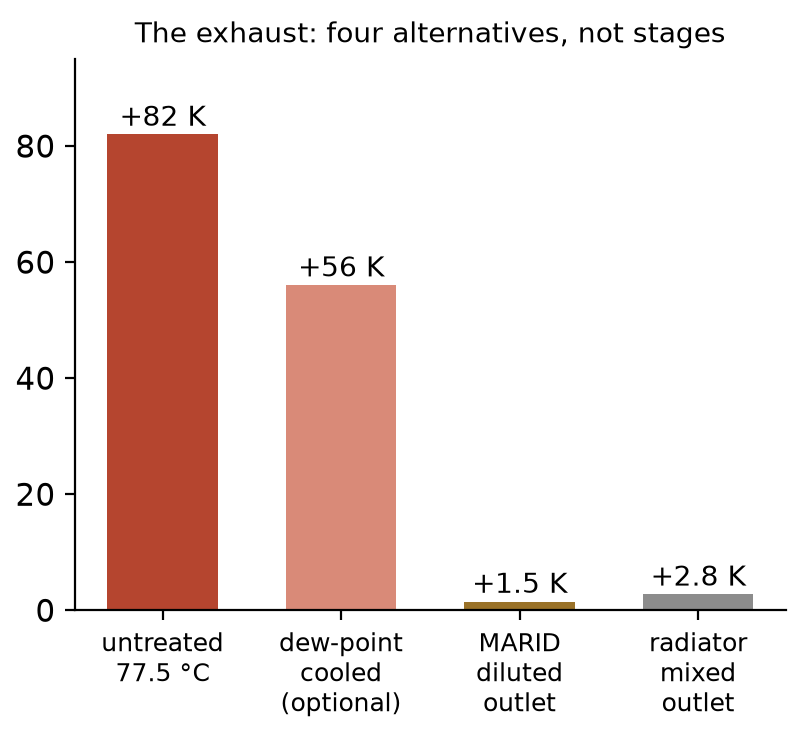
These are steady-state model results at one design point, 3,000 m by day. Nothing has been built yet. The paper states the assumptions the numbers depend on, and the first next step is a bonded panel and manifold test.
Publications and writing
Where to read more
- Conference paper, accepted A Leaf-Vein Hydrogen Spar Architecture for Cryogenic Fuel Conditioning and Distributed Waste-Heat Rejection: Toward Low Infrared Contrast in a Long-Endurance UAV AIAA SciTech Forum 2027, Orlando, session APS-01 Advanced Aerospace Thermal Management and Fluid Applications, 11 January 2027. Preprint on engrXiv.
- Essay Birdoid Drones Bird-inspired form, thermal management and future autonomous flight. October 2026.
- Original concept post Multi-Axis Rotary-Wing Integrated Design (MARID) Drone The original MARID concept post. August 2025.
- Patents Patent pending
About
Majd Chalak
I am an independent aerospace researcher in San Mateo, California. I conceived MARID and carry the systems view, the thermal architecture and the simulation work. I also develop MARID's GPS-denied navigation and flight-control models in ROS 2 and Gazebo, alongside the thermal study.
More on the blog.
Contact
Questions about the paper, the architecture or the talk are welcome.